Litigators of the Week: Rolling Back Elon Musk’s $56B Tesla Compensation Package
The question of whether Elon Musk was the “controlling shareholder” at Tesla while his record pay package was being hashed out was one of the central legal questions facing Delaware Chancellor Kathaleen McCormick.
After a five-day trial last year, McCormick this week gave a pretty emphatic answer in her 200-page opinion rescinding the $55.8 billion deal: Musk, at least as it came to this transaction, was in control.
McCormick wrote that “Musk launched a self-driving process, recalibrating the speed and direction along the way as he saw fit.”
“Swept up by the rhetoric of ‘all upside,’ or perhaps starry eyed by Musk’s superstar appeal, the board never asked the $55.8 billion question: Was the plan even necessary for Tesla to retain Musk and achieve its goals?” she wrote.
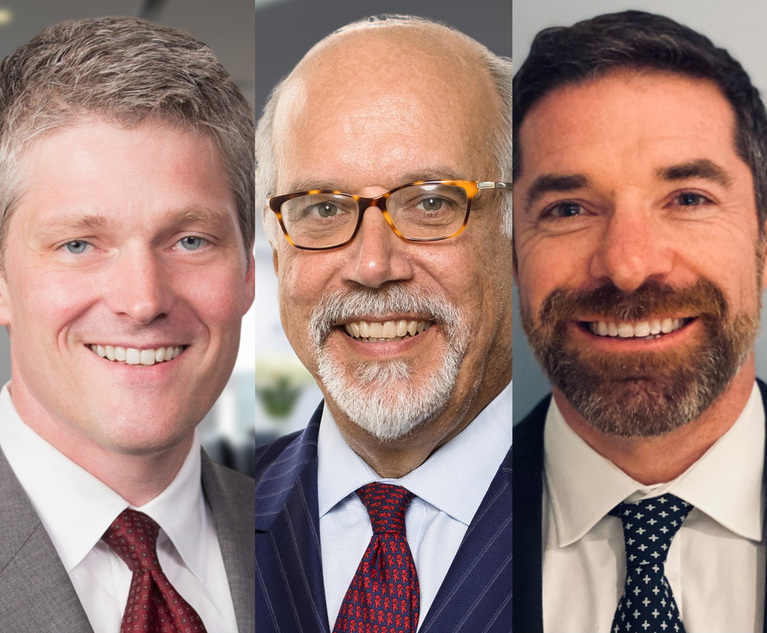
Our Litigators of the Week are
Greg Varallo and Jeroen van Kwawegen of Bernstein Litowitz Berger & Grossmann and David Tejtel of Friedman Oster & Tejtel, who led a plaintiff’s trial team.
Lit Daily: I usually start off by asking what was at stake. But here it was pretty clear that what was at stake was a $56 billion compensation package—one Chancellor McCormick pointed out was more than 33 times larger than its closest comparison point, Elon Musk’s prior comp plan. So let me ask: What greater legal principles were at stake here?
Jeroen van Kwawegen: The greater principle at stake is whether directors and officers of publicly traded companies will comply with their fiduciary duties to represent the interests of all shareholders and the company rather than the interests of a founder “superstar” CEO who is trying to get private benefits. This principle was magnified by the outsized personality of the “superstar” CEO and his outsized demand for private benefits that, if granted, would make him the richest person on earth. In deciding this question and finding that the directors did not comply with their fiduciary duties, the court applied well-established legal precedents to the facts that were established at trial.
Greg Varallo: Among other things, the court had to decide whether to make an evaluation of whether Elon Musk had control (general or situational) at Tesla. Her Honor did that, faithfully applying a substantial body of precedent to the huge factual record and concluded that Musk (situationally) controlled this exercise. Likewise, the court made important findings about the lack of independence (in fact) of various directors. This case affirms (again) the idea that any analysis of independence in Delaware is not a rote “check the box” exercise.
How did this case come to you and your firms? And as a shareholder who has seen the value of his Tesla stock grow dramatically under Musk’s tenure, what motivated your client to bring suit?
David Tejtel: The case was filed by Friedman Oster & Tejtel and
Andrews & Springer, who defeated the defendants' motion to dismiss and embarked on extensive discovery. As it became increasingly clear the case would be a massive undertaking and was destined for trial, we reached out to Bernstein, Litowitz, Berger & Grossman—with whom we have shared many previous successes, including at trial—to join our ranks, and we were thrilled when they agreed.
Who all is on your team and how did you divide the work, especially in the run-up to trial last year?
Tetjel: We had a large team made up of all three firms. From FOT, the team included Jeremy Friedman, Spencer Oster, Michael Lee, Lindsay La Marca and David Rosenfeld. From A&S, the team included Peter Andrews, Craig Springer, David Sborz, Andrew Peach, Jackson Warren,
Jacob Jeifa and Dara Cupingood. From BLB&G, the team was led by Greg and Jeroen with assistance from associates Meg Sanborn-Lowing, Glenn McGillivray and Dan Meyer. BLB&G also provided the logistics of the trial team, including trial support staff.
Van Kwawegen: Functionally, Greg took ownership of the overall trial strategy and deposed and cross-examined, among others, Elon Musk, Ira Ehrenpreis, and Robyn Denholm. David and the team at FOT took ownership of challenging the independence of the other Tesla directors, including deposing and cross-examining Antonio Gracias, James Murdoch and defendants' experts. A&S handled the direct examination of expert Brian Dunn, and cross-examined director Brad Buss. I took ownership of deposing and cross-examining Tesla management and the external compensation consultant facilitating Elon Musk's self-dealing in breach of their duties and contrary to the information provided to shareholders.
Greg, did your approach to examining Elon Musk—someone who has racked up quite a bit of time on the witness stand in various cases at this point—differ at all from your typical approach? And with this decision in hand, are there any particular moments from that exchange that stand out?
Varallo: Elon’s cross did not follow the ordinary patterns. First, I would point out that, although the Elon cross got all the attention, it was not as important as the publicity surrounding it would suggest. The cross of Ira Ehrenpreis, the Compensation Committee chair, director Antonio Gracias, and Todd Maron, the general counsel, were probably more important to the case than Elon’s.
This was reflected in the relatively short time that we allocated to this cross. That said, the biggest problem in preparing an Elon cross was the mountain of really good material to work with. Unlike the typical case where you sometimes have to scramble to find really good cross material, this one was the direct opposite. And Elon’s tweeting “habit” kept creating additional material every day. So it was an exercise in sifting through the very large amount of material to find only the very best evidence to use. Meg was particularly helpful in preparing this.
Then during the cross, I made the strategic decision not to try to “control” the witness, but rather let him tell his story. In response to an early “yes/no” question, Musk decided to try to catalog his thoughts since birth. Rather than cut him off, I let him speak. Ten minutes or so later the court interrupted to ask Musk if he remembered the question, which he didn’t. This turned out very well because, in the end, Musk disciplined himself.
Jeroen, you cross-examined Todd Maron, Musk’s divorce attorney who became Tesla’s general counsel. The decision notes he held back tears during his deposition and trial when talking about leaving the company. How important was he to illustrate the conflicts at play here and the lack of internal recognition of them at Tesla?
Van Kwawegen: Maron’s testimony was important to show the pervasiveness of the “controlled mindset” among all fiduciaries—directors and executives—to just give Musk what he demanded without negotiation or regard for their own duties to Tesla’s public shareholders. Founders/dominant CEOs often believe and act as if what is good for them is inevitably also good for the company and other shareholders. In this case, everyone around Musk, including Maron, bought into that idea. But there can be conflicts of interest of course, including when setting operational milestones for the compensation package or when deciding how much time the CEO must spend on projects for the company. Maron was so emotionally invested in his relationship with Musk that he did everything to facilitate Musk’s wishes—including allowing Musk to “negotiate with himself”—even though Maron had his own fiduciary duties to Tesla’s shareholders.
What lessons do you hope compensation committees take from this trial and this decision?
Varallo: In my prior life as a defense lawyer I had occasion to counsel quite a few comp committees. When they understood what their goal was and the importance of independence, they did brilliantly. But that requires an understanding that they are not the CEO’s buddies whose job is to give him whatever he asks for. They are supposed to deal with the topic at arm’s length. As the court found, Tesla’s committee failed miserably at that goal.
Van Kwawegen: Equally importantly, I would say that the choice of the compensation advisors and/or the committee not to ask for benchmarking data was inexcusable here. At trial, I cross-examined the compensation consultant who testified that the committee “knew” that the benchmarking data would show that Musk’s requested compensation package was so far off the charts that they decided not to use it. In other words, they made a conscious decision not to use any benchmarking because it would not help give Musk what he wanted. That is truly awful and something that should never, ever happen again.
Tejtel: The decision also helps underscore the critical importance of independence. Although personal and professional conflicts of interest are no strangers to corporate boardrooms, the conflicts permeating the Tesla Board here were exceptionally deep. For example, ostensibly independent Compensation Committee member Antonio Gracias admitted at trial to amassing dynastic and generational wealth through his relationship with Musk, being close friends with Musk, and vacationing internationally and spending holidays with Musk and their respective families. The near-familial nature of such conflicts poisons the process that produces the compensation plan.
What lessons can potential plaintiffs in these types of actions take from what you have accomplished here?
Van Kwawegen: The “lessons” that stand out for me are that we live in a country where the rule of law matters; that we have courageous public servants who are not intimidated and who, in good faith, are exercising their duties; and that a shareholder who sees something that he or she believes is wrong can get a fair hearing even if the defendant is one of the richest and most powerful people in the world with a privately-owned communications network. That is a remarkable testament to our country.
Not to get ahead of myself here, but how does the attorney fees process work in a matter such as this?
Varallo: In Delaware corporate litigation matters, successful attorneys who take matters on a contingent fee basis are entitled to a “percentage of the benefit” that they create. The court awards that fee based on a series of well-known factors, the primary one of which is the benefit created.
What will you remember most about this matter?
Varallo: Elon testifying that he took the red eye to fly to court (on his G5).
Tejtel: For me, a particularly memorable part was when Antonio Gracias, at the conclusion of being cross-examined regarding his conflicts of interest, stated on the record: "Yes, yes, yes, yes, yes, yes, yes, yes, yes. ... I stipulate to yes."
Van Kwawegen: What I will remember most of this matter? That is easy. My cross of the compensation consultant. He was the last witness of the case. We were under time pressure. After catching him in a lie on direct (that he would normally not use benchmarks while he testified the opposite in his deposition), I used the remainder of our limited time to walk the court through all the various iterations of the comp plan, showing there were no meaningful changes after Elon first proposed it. It was like a summation at the end of trial before post-trial briefing and argument.