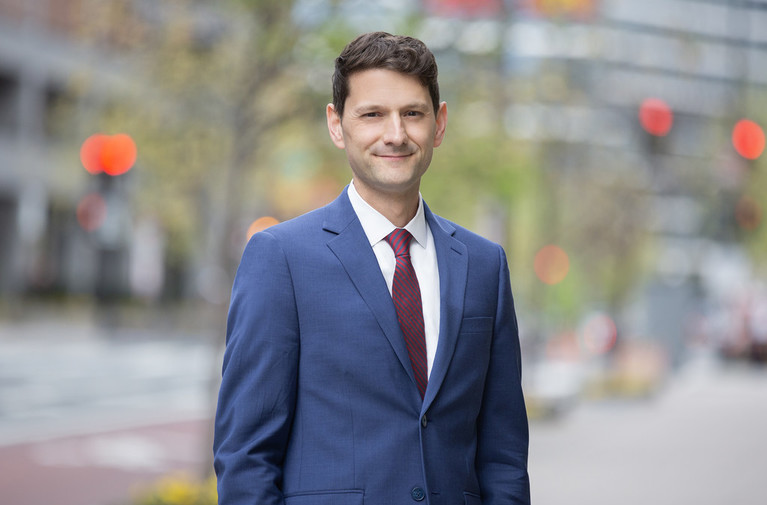
A divided Third Circuit panel held that Kalshi’s sports-related event contracts fell within the Commodity Exchange Act’s definition of 'swaps' subject to the Commodity Futures Trading Commission’s jurisdiction, handing a win to the company and lead counsel Will Havemann of Milbank.
Apr 10, 2026 View in Browser

Law.com

Litigation Daily

Analyzing the Intersection of Litigation and the Business of Law

Good morning. It’s Friday, April 10, and I’m Litigation Daily editor and columnist Ross Todd here with our latest batch of Litigator of the Week Runners-Up and Shout-Outs. Keep the nominations coming my way at ross.todd@alm.com.


First up is a team led by Gibson, Dunn & Crutcher partners Theodore Boutrous Jr. and Blaine Evanson and Stoel Rives partner Brad Daniels that secured a significant appellate win for the Oregon utility company PacifiCorp in a wildfire class action. Plaintiffs whose property was damaged in four wildfires that burned over Labor Day weekend 2020 have already won more than $1 billion in total verdicts in follow-on, individual damages trials, with dozens more on the calendar. But this week the Oregon Court of Appeals held that the judge in the initial class action trial establishing PacifiCorp’s liability and negligence erred by instructing jurors to “assume that the evidence in the trial applies to all class members.” The appellate court reversed and remanded the initial class action verdict and invited the trial court to reconsider whether a single class was the appropriate vehicle to consider claims from four burn areas separated by well over 100 miles. The question of what sparked the largest of those fires is still contested by the parties. The team included Gibson Dunn partner Joseph Edmonds and associates Jacob Arber, Branton Nestor, James Rex Lee, Robert Frey and Varant Anmahouni.


A Sidley Austin team led by Daniel Feith worked alongside a separate appellate team at Gibson Dunn challenging the Environmental Protection Agency’s denial of small-refinery exemptions to their clients under the Clean Air Act’s Renewable Fuel Standard program. A unanimous D.C. Circuit panel held this week that the EPA’s interpretation of its own regulation—that the refineries were required to comply with the 75,000-barrel “small refinery” limit in 2023 as well as 2024—were contrary to the plain language of the statute, which indicated they need only comply in 2024. Feith argued on behalf of both petitioners. The Sidley team representing Alon Refining Krotz Springs Inc. also included Peter Whitfield, Cody Akins and Peter Bruland. The Gibson Dunn team representing HF Sinclair Parco Refining included Christine Buzzard, Robert Frey, Stephen Hammer, Allyson Ho, Lavi Ben Dor and M. Christian Talley.


Shout-out to a team at Arnold & Porter Kaye Scholer representing Pacific Market International LLC, the maker of the popular Stanley drink tumblers, in a consolidated consumer class action alleging that the company failed to disclose the use of lead in its products. Last week, U.S. District Judge Tana Lin in Seattle granted Pacific Market’s motion to dismiss, holding that the plaintiffs failed to provide any explanation of how lead from pellets used to seal the vacuum insulation at the base of the products “might enter a consumer’s body and cause harm.” The Arnold & Porter team includes partners James Speyer, E. Alex Beroukhim, Pallavi Mehta Wahi and Ashley Gammell, counsel Elie Salamon and associates Owen Connolly and Nina Leviten.


Shout-out to Sean Gallagher, Andrew MacNally, Dan McElroy and Gabe Levin of Bartlit Beck who represent Hamilton Sundstrand Corp. in the first of over 30 related cases stemming from allegations that the company’s former Camdenton, Missouri, facility exposed the surrounding community to trichloroethylene, a degreasing solvent used in its metal products manufacturing plant. Last week, in a wrongful death suit brought by the family of a local resident who claimed the contamination caused him to develop a fatal autoimmune kidney disease, the Missouri Court of Appeals upheld a defense verdict for Sundstrand and its co-defendant, Modine Manufacturing Co. The Bartlit Beck team representing Sundstrand includes Sean Gallagher, Andrew MacNally, Dan McElroy and Gabe Levin. Modine, which purchased the plant from Sundstrand in 1990, was represented by Patrick Fanning and Kayla Brewe of Lathrop GPM and Brian Watson of Riley Safer Holmes & Cancila.


Shout-out to Chris Michel, Jack Baumann and Shon Morgan of Quinn Emanuel Urquhart & Sullivan, who represented Ancestry.com in the appeal of a Pennsylvania trial court order that would have forced the state to hand over images, indexes and metadata Ancestry created as part of an effort to digitize certain paper and microfilm records. The Commonwealth Court of Pennsylvania, sitting en banc, issued an opinion last week finding Ancestry’s digitization work was not a “governmental function,” meaning the content Ancestry created was not subject to the state’s Right to Know law. The Quinn team on the matter includes associate Caitlin Jokubaitis.


Shout-out to a team at Simpson Thacher & Bartlett representing M&T Bank Corp. in shareholder litigation stemming from the bank’s $3.7 billion merger with Hudson City Bancorp Inc. In a decision issued late last month and unsealed this week, Federal Circuit Judge Evan Wallach, sitting by designation in the District of Delaware, granted summary judgment to M&T finding that the plaintiffs failed to show the bank made material misrepresentations or omissions in proxy materials. The judge further held the proxy materials were subject to—and limited by—the bank examination privilege and regulations governing the disclosure of confidential supervisory information. Wallach wrote: “M&T could not publicly disclose privileged information given to them by federal regulators without violating the privilege and eroding the purpose of the privilege.” The Simpson Thacher team includes Jonathan Youngwood, Janet Gochman, Noah Gimbel, Katherine Hardiman Sherwood, Margerite Blase and Alysia Lo.


Shout-out to litigators at Skadden, Arps, Slate, Meagher & Flom representing Amadeus Hospitality and its parent company Amadeus IT Group SA in an antitrust class action claiming the company conspired with eight luxury hotel brands to inflate prices using the company’s Demand360 software platform. U.S. District Judge Joan Gottschall in Chicago last week dismissed the suit with prejudice, finding no evidence of any enforcement mechanism that would be needed to plausibly sustain a “price stabilization cartel.” The Skadden team leading the briefing on the defendants’ joint motion to dismiss included Karen Lent, Matt Martino, Amy Van Gelder, Sammuel Auld, Michael Lanci and Madeleine Gramigna. Douglas Litvack and Lindsay Harrison of Jenner & Block represented Hyatt Corp. Christopher Curran, J. Mark Gidley and J. Frank Hogue of White & Case represented Four Seasons Hotels Ltd. Carrie Mahan, Benjamin Mundel, Nicole Booth and Noah Fitzgerel of Sidley Austin represented Accor Management US Inc. Tammy Adkins of McGuireWoods and Jarrett Arp, Mari Grace, Neal Potischman and Tina Hwa Joe of Davis Polk & Wardwell represented Hilton Domestic Operating Co. Jeffrey Cashdan, Emily Newton, Lohr Beck, Caroline Buyak and Zachary Fardon of King & Spalding represented Six Continents Hotels Inc. Kristen Limarzi, Melanie Katsur and Sarah Akhtar of Gibson Dunn and Jeffrey Hansen and Matthew Kramer of Actuate Law represent Marriott International Inc., The Ritz-Carlton Hotel Co. and Starwood Hotels & Resorts Worldwide. Katherine Forrest, Matthew Robinson and Paul Brachman of Paul, Weiss, Rifkind, Wharton & Garrison represented Loews Hotels.


Shout-out to firms defending Ivy League universities from a proposed class action claiming the schools violated federal antitrust law by agreeing to not offer athletic scholarship, effectively eliminating competition over athletic-based aid for elite student-athletes. A Second Circuit panel this week upheld a decision knocking out the case, agreeing that the plaintiffs had failed to plead a plausible relevant market for either the sale of educational services or the purchase of athletic services. Seth Waxman of Wilmer Cutler Pickering Hale and Dorr argued the appeal on behalf of the defendants. The Wilmer team representing the Trustees of the University of Pennsylvania included David Gringer and Alan Schoenfeld. Noah Kaufman and Jon Roellke of Morgan, Lewis & Bockius represented Brown University. Skadden’s Karen Lent and Amy Van Gelder represented the Trustees of Columbia University in the City of New York. Norman Armstrong Jr. and Emily Chen of Kirkland & Ellis represented Cornell University. Ishan Bhabha and Douglas Litvack of Jenner & Block represented the Trustees of Dartmouth College. Diane McGimsey of Sullivan & Cromwell represented Harvard University. Juan Arteaga, Rosa Morales and Jordan Ludwig of Crowell & Moring represented Princeton University. Charles Loughlin, Benjamin Holt and Christopher Fitzpatrick of Hogan Lovells represented Yale University. Derek Ludwin and Meaghan Ryan of Covington & Burling represented the Council of Ivy Group Presidents.


Here’s one last shout-out to Manatt, Phelps & Phillips partner Naeun Rim and Bird Marella partners Ekwan Rhow and Christopher Jumin Lee. In what appears to be the first time a U.S. court has denied extradition on humanitarian grounds, they secured a writ of habeas corpus for pro bono client Christopher Ahn. Ahn claims he was part of a staged kidnapping at North Korea’s embassy in Madrid, Spain, in 2019 as part of an effort to help a group of North Koreans defect. He was charged criminally in Spain after none of the North Koreans actually defected.  Last week, U.S. District Judge Fernando Aenlle-Rocha held that extradition would violate Ahn’s substantive due process rights and that it was barred under the state-created danger doctrine.


Litigator of the Week: Third Circuit Shields Kalshi Sports Contracts from NJ Gambling Laws


Our Litigator of the Week is Will Havemann of Milbank. Havemann represented financial exchange and prediction market Kalshi at the Third Circuit in a case considering whether New Jersey could enforce state gambling laws against the company’s sports-related event contracts. In the first fight over state regulation of prediction markets to make it to a federal appeals court, a divided Third Circuit panel this week upheld a lower court injunction against the state. The majority held that contracts in question fell within the Commodity Exchange Act’s definition of 'swaps' which are subject to the Commodity Futures Trading Commission’s exclusive jurisdiction.


"Because Kalshi’s sports-related event contracts are traded on a CFTC-licensed [Designated Contract Market] and depend on event outcomes associated with economic consequences, they fit within the Act’s definition of 'swaps' subject to the CFTC’s jurisdiction,” wrote Circuit Judge David Porter.


Lit Daily: What was at stake for Kalshi in this appeal?


Will Havemann: It’s hard to overstate how important this litigation is to Kalshi. Starting early last year, New Jersey and other states began threatening Kalshi with criminal penalties for offering event contracts, including contracts related to sports. Kalshi very much believes in regulation, but its exclusive federal regulator is the CFTC, and it can’t comply with a patchwork of 50 different states’ laws while operating a nationwide exchange. So, it is critical to reaffirm that the CFTC has exclusive jurisdiction to regulate derivatives exchanges like Kalshi.


How did this matter come to you and the firm?


My partner Josh Sterling worked on prior litigation for Kalshi involving election contracts, so Milbank was a natural choice when states began sending Kalshi cease-and-desist letters. I joined Milbank a little over a year ago, and the Kalshi litigation was the first thing on my desk when I arrived. I’ll never forget the timing: New Jersey sent us a cease-and-desist letter on a Thursday, and we filed our complaint and sought a preliminary injunction at about 3 a.m. that Saturday morning. Very little sleep occurred in the meantime.


Who is on your team and how have you divided the work?


This is one of the largest and most complex litigations I’ve ever worked on. We have cases in 13 federal and state courts addressing whether federal law preempts state regulation of Kalshi. We also have seven appeals, two cases involving a federal statute called the Indian Gaming Regulatory Act, a group of cases brought by private LLCs seeking to recover under an 18th-century gambling law imported to this country from England, and a few class actions. All of which is to say that this litigation is a major undertaking, and I am just a small part of a great team.


The team and I put a lot of work into preparing for the oral argument. I’ve learned from the best—Neal Katyal was my second chair at the Third Circuit. Other key team members were Josh Sterling, our CFTC guru, Gurbir Grewal, the former Attorney General of New Jersey, Colleen Roh Sinzdak, who recently joined Milbank from the Solicitor General’s Office, and Grant Mainland, one of the most talented litigators I’ve ever worked with. There were too many other team members to name, but special mention is due to Sami Ilagan and Davis Campbell, two exceptional associates.


I started holding moot courts a couple of weeks before the argument to get a sense of every question that could come up. Because appellate arguments are so much shorter than district court arguments, a lot of the preparation involved distilling responses down to their core, to make sure that every second at the lectern advanced our case. Then it was an iterative process of testing answers and improving upon them based on feedback from Neal and the many other colleagues who helped me prepare.


What question was the Third Circuit being asked to resolve in this case, and why did it matter beyond Kalshi and New Jersey?


A federal statute called the Commodity Exchange Act grants the CFTC exclusive jurisdiction to regulate trading on federal derivatives exchanges, which are known as Designated Contract Markets or “DCMs.” Kalshi is a DCM, so this case presents the question whether trading on Kalshi is subject to exclusive regulation by the CFTC, or if instead 50 different states may subject Kalshi to a patchwork of 50 sets of differing regulations.


The case matters well beyond New Jersey and well beyond Kalshi. New Jersey’s theory would give states the right to ban all event contracts, so this case is really about whether prediction markets can exist in this country under federal oversight, or whether they’ll instead be pushed offshore where they will be subject to no oversight. The case is also a reprise of a longstanding turf battle between states and the federal government over innovation in the derivatives markets.


Here you had been granted an injunction below. How much of an advantage was that for you to be arguing to uphold a district court win in the first of these cases to go before a federal appeals court, rather than to be asking for a reversal?


It is always helpful to be defending a district court decision, especially a decision by an excellent judge like Judge Kiel. But the main issues in this case are legal questions involving federal preemption, and the Third Circuit reviewed those issues anew.


During argument, there was concern about slippery slopes—casino games, ping‑pong matches, raffle tickets. How did you convince the court that recognizing these contracts as swaps wouldn’t federalize all gambling?


It was important to us to convey to the Third Circuit that our position is a modest one. Federal law preempts state law only as applied to trading on federally regulated DCMs like Kalshi. It leaves states free to regulate activity that occurs off DCMs. The excellent counsel for New Jersey tried to persuade the panel that the implication of our argument was broader than that, with hypotheticals about ping-pong and raffles. But ultimately the majority agreed with us that our position would not lead to these slippery-slope consequences.


One of New Jersey’s central points was that states have historically regulated gambling. How did you address that tradition without minimizing legitimate state interests?


One of interesting things I’ve learned through these cases is that many states a century ago banned all futures trading as gambling—they called it “gambling in grain.” There are some colorful judicial opinions from the late 19th century banning futures trading as a “species of gambling” and a “national sin.” In our view, Congress clearly put an end to that when it granted the CFTC exclusive jurisdiction over trading on federal exchanges. So, while it is true that states have historically regulated gambling, there is a lot of evidence that Congress did not want states to regulate trading on DCMs as a form of gambling.


We do not want to minimize states’ interest in regulating gambling products over which they have jurisdiction. At the same time, we have tried to convey the important differences between Kalshi’s contracts and gambling products, to help explain why it makes sense for Kalshi to be regulated at the federal level. Unlike a sportsbook, Kalshi’s exchange is not the “house.” It doesn’t set odds, doesn’t win when its users lose, and doesn’t have any ability or incentive to favor itself over its users. Instead, it operates a nationwide exchange where users trade at prices set by market forces, which is how all derivatives exchanges operate.


The dissent argues that Congress never clearly intended the CFTC to function as a nationwide sports‑gaming regulator. What is Kalshi’s response to that concern?


Our response is the same as the majority’s—that the best evidence of Congress’s intent is the statutory text. And, in an important development since the Third Circuit case was briefed and argued, the CFTC itself has filed amicus briefs and affirmative lawsuits against states to defend its exclusive jurisdiction, and to convey that it is fully capable of regulating these instruments.


What’s next? Where else is Kalshi litigating with state litigators and when can we expect other federal appellate courts to weigh in on this question?


There is much more to come. Colleen Roh Sinzdak and I will be arguing at the Ninth Circuit for Kalshi next week. I also have a Fourth Circuit argument in May. Grant Mainland will be arguing in the Supreme Judicial Court of Massachusetts in May. Briefing is underway in two different appeals in the Sixth Circuit. And we have ongoing litigation in many (many!) different district courts.


What will you remember most about this matter?


The main thing I’ll remember is the extraordinary group of lawyers and staff here at Milbank whose hard work has put us in a position to be successful, and the clients who have entrusted us with the privilege and responsibility of representing them.


What I'm Reading:

After Quick Exit by Last Enforcement Chief, SEC Turns to Deeply Experienced Gibson Dunn Partner

David Woodcock led the agency's Fort Worth office for four years and went on to serve as a partner at two Am Law 50 firms and as an assistant general counsel at Exxon Mobil.


Compass Dismisses Zillow Antitrust Lawsuit After Mulling Outside Counsel Shakeup

Plaintiff Compass Inc. was "in the process of retaining new lead counsel" after a Manhattan federal judge denied its motion for a preliminary injunction and before Compass decided to voluntarily dismiss its antitrust lawsuit against Zillow Group Inc., according to court documents.


‘The Next Addiction Crisis’?: Stake.com and Coinbase Accused in Complaint of Luring Minors Into Online Gambling

Represented by Seeger Weiss, Rafferty Domnick Cunningham & Yaffa and the Schenk Law Firm, the plaintiff said he was “recruited” onto Stake.com as a 13-year-old, before he was legally able to gamble.


The Billable Hour Enters a Whole New Dimension: Lawyer Billed Client For 34 Hours of Work in a Single Day

The Sydney, Australia-based lawyer was sued for overcharging.


Nonequity Expansion Goes Hand-in-Hand with Lateral Additions

Lateral talent raids and exits among Am Law 50 firms have been more poignant in 2026, with nearly every day a Big Law firm announcing the addition of a practice group leader or rainmaker from a competitor firm.


In Case You Missed It:

Test Ride to Trial Strategy: Mapping Potential AV Claims and Defenses

The Cooper Firm partner Rebekah Cooper and ALM Media Senior Litigation Reporter and Legal Speak Podcast Co-Host Cedra Mayfield talk shop after riding in a self-driving Waymo rideshare in Atlanta.

Connect With Law.com

Terms of Use |  Privacy Policy
© Copyright 2026 ALM Global, LLC trading as Centellic
CENTELLIC
LAW.COM
220 E 42nd St | New York, NY 10017 | 1-877-256-2472