Litigators of the Week: A Nine-Digit Tax Win for ExxonMobil Over Qatari Gas Deal
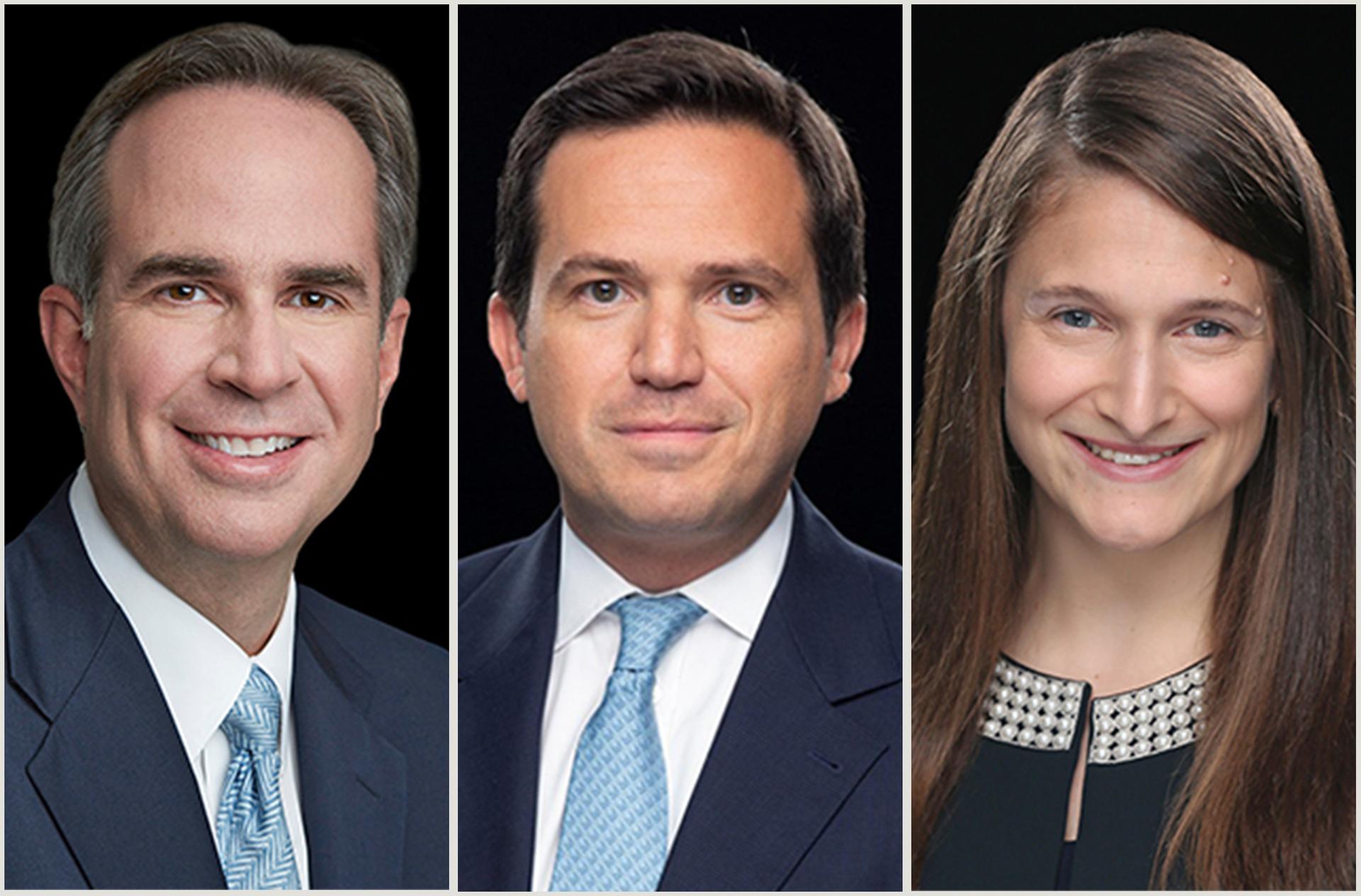
Our Litigators of the Week are James Rouhandeh, Antonio Perez-Marques and Lara Samet Buchwald of Davis Polk & Wardwell.
Back in November 2024, the Davis Polk team took home Runners-Up honors after securing a big win for ExxonMobil Corp. in the first phase of a bifurcated tax dispute with the federal government.
After the initial phase, then-U.S. District Chief Judge David Godbey in Dallas wrote that he went into the one-week bench trial “fully prepared to hold” that ExxonMobil was “creatively rewriting history for tax purposes.” After hearing the evidence, however, the judge found that the company was entitled to take certain interest expense deductions stemming from a partnership with the State of Qatar to develop and market natural gas in the North Field.
This week, after the two sides took starkly different views of how that deduction should be allocated, now-Senior Judge Godbey again sided with ExxonMobil, granting the company’s summary judgment motion and denying the government’s.
What was at stake for ExxonMobil here?
Jim Rouhandeh: This tax refund litigation related to a transaction that began two decades ago on the other side of the globe. The IRS rejected ExxonMobil’s tax position, ExxonMobil paid the disputed taxes and penalties years ago, and ExxonMobil was the plaintiff seeking the return of those payments. As the plaintiff, we carried the burden of unearthing the relevant factual record, which required an enormous effort. Sometimes we have a dual role in these types of trials—part lawyer and part archaeologist.
How did this matter come to you and the firm?
Rouhandeh: We were engaged by ExxonMobil in 2021 well in advance of our filing of a complaint in March 2022. We were not hired to try this case because we were tax litigators; we were hired for our ability to streamline and present complex issues for trial.
Who was on your team and how have you divided the work? What contributions did your co-counsel at Holland & Knight make?
Antonio Perez-Marques: ExxonMobil brought on a virtual team from both Davis Polk and Holland & Knight—we were deliberate from the outset that this was an integrated team and one that worked together closely. In fact, a mantra from the early days was that there was no “Davis Polk team” or “Holland & Knight team,” but instead a single unified team. As a practical matter, the Davis Polk members of the team were the trial lawyers that developed and executed on our litigation strategy, and the Holland & Knight members of the team had significant tax expertise, which was critical to that strategy. But our goal was to ensure that we were not siloed and that strategic decisions were collaborative. Mary McNulty and Lee Meyercord, in particular, are talented tax lawyers who are core members of the team, and Dina McKinney and Meghan McCaig are sophisticated litigators, and they were there with us and the client each step of the way.
The rest of the Davis Polk team included counsel Sean Stefanik, and associates Kyra Macy Kaufman, Kathleen M. Lewis and Kaitlin Campanini.
Judge Godbey began his decision after the first phase of the case by saying that when the trial started, he was “fully prepared to hold” that ExxonMobil was “creatively rewriting history for tax purposes,” but the evidence changed his mind. Looking back, what evidence or testimony do you think did the most to overcome the court’s initial skepticism?
Lara Samet Buchwald: The transactions at issue date back to 1999-2006, which meant that very few percipient witnesses remained at ExxonMobil. But as the plaintiff, it was our burden of proof and our responsibility to identify the witnesses to tell the story at trial. Our fact witnesses at trial were an incredible group of former ExxonMobil employees—many of whom had been retired for over a decade—who traveled from all over the country and outside of the U.S. and who provided clear, compelling testimony. And when the facts are clear and consistent with the tax position, and the witnesses are compelling, that often drives the answer, even where the issues at first blush seem complex.
The first phase required you to persuade the court that Al Khaleej Gas was a genuine partnership and that the production payment should be treated as debt for tax purposes. How did you go about turning what could have been an extremely technical tax dispute into a factual story for the court?
Buchwald: From the beginning of the case, our responsibility was to think practically about the case. This enabled us to find the people who could share their perspective on the key issues. It also led us to critical evidence—billboards from decades ago that described Al Khaleej Gas as a partnership, videos prepared at the launch of the project with interviews that forcefully did the same, minutes of meetings and attendees at those meetings, which demonstrated how the partners worked together day-in and day-out—all of which made clear that this was not a made-for-litigation argument but a position that stood on an impenetrable factual foundation.
The court specifically credited ExxonMobil’s lay and expert witnesses after trial. How did you decide which witnesses you needed to tell that story, and what were you trying to establish through each of them?
Perez-Marques: Our fact witnesses did what every trial lawyer hopes their witnesses will do collectively—tell their piece of the story in a compelling way so that the collective testimony leaves a clear picture for the factfinder. We had former senior executives testify about the genesis of the transaction and how it compared to other transactions in the region and across the world; former employees responsible for the governance of the project; former employees responsible for financing and tax matters; and former employees responsible for the management of the project. They each shared different perspectives, but when the facts drive the litigation position—as they did here—the trial narrative comes together seamlessly.
Our two expert witnesses—David Plastino of the Brattle Group and Professor Owen Anderson of the University of Texas at Austin—complemented the fact witnesses and played a key role in connecting the dots between the historical narrative and the economics that drove the tax analysis.
After winning the merits trial, did you expect the fight over calculating the refund to be as significant as it ultimately became? Judge Godbey wrote in his latest decision that he had “naively” expected the parties’ accountants to resolve the remaining computation issues in “an hour or two.” What happened instead?
Rouhandeh: Counsel for both parties worked hard to narrow any issues for Phase II and we were, in fact, able to narrow them meaningfully. But there were several critical gating issues that could not be resolved consensually and, without resolution of those issues, it was impossible for the parties to reduce the trial decision to a final judgment. Even though we were not able to obviate a litigated Phase II, the work we did to narrow the issues with opposing counsel helped us tee up the remaining issues concisely and persuasively.
How important was it that the tax treatment you were advocating in Phase II had been memorialized in the parties’ agreement nearly two decades earlier and had been reflected in ExxonMobil’s tax reporting since 2006?
Rouhandeh: Those facts were two of the issues that the court considered in both phases. That said, and as the merits decision made clear, it was the groundswell of consistent evidence—the genesis of the partnership, the agreement itself, the negotiation history, the conduct of the parties in the years after the transaction, and the tax reporting position—that made our position as strong as it was. One of the most compelling aspects of this case was that this partnership existed even before the merger of Exxon and Mobil.
There is an interesting contrast between the two phases here: The first involved a week-long trial with witnesses and extensive evidence, while the allocation phase presented pure legal questions on summary judgment. How did your advocacy change between those two phases?
Buchwald: We advocated for bifurcation before Phase I because the merits issues required witnesses, documentary evidence, and meaningful briefing, whereas the Phase II issues could either be eliminated or narrowed based on the Phase I ruling. This case was a very good example of where bifurcation can save party and judicial resources. Moving into Phase II, we were aware that the strategy required clear explanation of statutes, regulations, and various calculations, but while the inputs to the strategy changed, the overarching goal of explaining complex issues clearly and with concision never changed.
The latest order gives you about $274 million AKG tax refund your briefing sought for 2010 and 2011. Your papers also sought about $182 million in penalty refunds, plus other tax and interest amounts. What else has to happen before you can put a final dollar figure on the overall recovery?
Buchwald: In short, math. The hard substantive work is complete. The parties have litigated and the court has resolved everything that needs to be resolved. Unlike a typical judgment, this one requires further coordination with opposing counsel to ensure everyone is aligned. But we are very pleased to have closed all major chapters of this litigation.
What is one strategic or advocacy lesson from this case that you would carry into another complex tax trial? Or any complex case, for that matter?
Perez-Marques: The lesson I will take away from this case is the importance, even in highly technical disputes (or perhaps, especially, in such disputes) of having a clear and compelling narrative. The tax issues in this case were highly complex. But the narrative of the business deal that the parties had struck was crystal clear and rock solid based on the documents and testimony and, despite disagreeing on the tax analysis, the other side did not have an answer on the history of the deal. Once that history was clearly understood, the correct tax treatment followed logically. We, of course, had to engage with the complexity of the tax issues, but it was important to resist the temptation to get tangled up in it and not to let that complexity dissuade us from doing what litigators do by telling a clear, human story.
What will you remember most about this matter?
Rouhandeh: We worked hand in glove with so many people at ExxonMobil to bring this case from concept to conclusion. The talent of the legal team, the business team, and the tax team at ExxonMobil was very impressive. This close relationship was perhaps most important in the period before we filed the complaint—we developed the successful strategy for the case working side by side with the client well in advance of the day the complaint hit docket.
Perez-Marques: We brought this case from complaint to trial in two years. We did it while staying focused on our key objectives, steadily building the case brick by brick, and without getting waylaid by disputes that can sidetrack overall strategy.
Buchwald: The talent on our legal team—across the board—was striking. We got to see the skills of exceptional lawyers at Holland & Knight daily, including Mary McNulty, Lee Meyercord, Dina McKenney, and former partner Meghan McCaig. And we had associates taking and defending depositions and appearing at the podium at trial, including now-counsel Sean Stefanik, who is masterful in the courtroom and a central member of the team. We know how talented our colleagues are, but it is always valuable when our adversaries and the court get to see what we see each day.