Litigators of the Week: In First Roundup Trial After SCOTUS Decision, A Defense Win for Monsanto
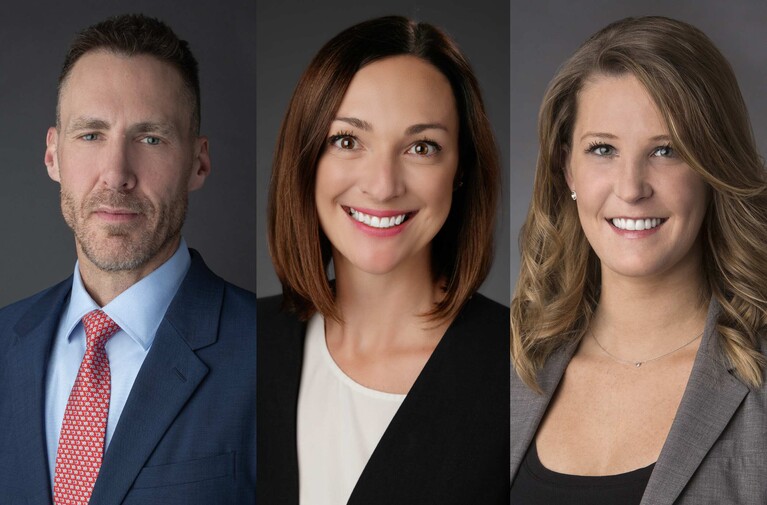
Our Litigators of the Week are Paul Boehm, Michelle Ramirez and Morgan Branch of Sidley Austin, who represented Monsanto in the first Roundup trial to reach a jury since the U.S. Supreme Court's June decision in Monsanto v. Durnell reshaped the litigation landscape this spring.
The three plaintiffs, all Florida residents, claimed that years of exposure to the company's blockbuster herbicide caused them to develop non-Hodgkin lymphoma. But after nearly six weeks of trial in Missouri state court, a St. Louis County jury handed Monsanto a complete defense verdict, rejecting the plaintiffs' design defect, negligence and personal injury claims in less than two hours of deliberation. The verdict was closely watched as an early test of Roundup cases following the Supreme Court's ruling..
Lit Daily: What was at stake for Monsanto in this trial?
Paul Boehm: It’s a significant win for our client and an important moment in the litigation. This was the first Roundup trial since the Supreme Court’s ruling in Durnell, which confirmed that plaintiffs’ failure-to-warn claims are preempted under federal law. So beating back plaintiffs’ design defect, fraud, negligence, and other claims—and winning directed verdict on punitive damages along the way—sends an important message.
How did this matter come to you and your team?
Michelle Ramirez: Bayer is one of Sidley’s longstanding life sciences clients. In 2025, when Paul was with a different law firm, Bayer paired Paul and me together as trial counsel. We had not worked together before, and it was trial magic. So when Bayer asked us to partner together again—and now we are at the same firm—for the first post-Durnell trial, we were thrilled.
Who was on your team, and how did you divide responsibilities at trial?
Ramirez: We were so fortunate to partner with some of the best lawyers in the country. Erik Hansell from Husch Blackwell was our extraordinary Missouri-based trial counsel, and Justin Benson from Bryan Cave led the law and briefing team. The Sidley team included Rachel McKenzie, Amanda Blau, Tommy Hoyt, Robert Santamarina, Jennifer Kuo, Sarah King and Dana Velcovich. And none of this would be possible without the amazing team from Nelson Mullins, who provided critical support on the science, as well as from legal assistants and tech and graphics support.
This was the third case Paul and I have tried together, and we have a good sense of how to best divide trial work. The bottom line, though, is it was extraordinarily collaborative. We worked closely together on both opening and closing, as well as witness outlines and jury selection, to ensure consistency on themes and key points. And the jury definitely noticed and appreciated that we worked together as a team.
As Paul noted, this was the first Roundup trial after the Supreme Court's ruling in Monsanto v. Durnell. Did that shape your preparation or strategy heading into trial?
Boehm: Yes, Durnell was central to our planning and strategy, and we were grateful to build on that result. Michelle and I also handled a Roundup trial together last year in which the team knocked out plaintiffs’ failure-to-warn claims at the summary judgment stage, so that was also helpful in preparing for the post-Durnell landscape.
When you're standing in front of a jury with people who have cancer and believe your client’s product caused it, how do you balance empathy for those plaintiffs with the advocacy job in front of you?
Ramirez: Two things can be true at once: You can and absolutely should have empathy for the three women and their families. Cancer is simply unfair. And each of us have had personal experiences with how horrible cancer is for loved ones. We never lost sight of our sympathy for these women and their families. But we also felt confident based on the overwhelming scientific evidence that Roundup did not cause their cancers.
Paul and I were very up front with the jury about our sympathy during opening and closing. And we were up front that we were not asking the jury to side with a company over people, or to disregard their empathy. But we were asking them to follow their duty and the science. What we said was genuine and I think the jury knew that.
One thing I noticed reading the openings and closings is that you repeatedly tried to pull the jury back to the same question: What does the science show about causation? Was that the organizing principle of your defense from the beginning?
Boehm: You’re right. We felt extremely confident in the strength of the science. We wanted to put the worldwide scientific consensus about Roundup’s safety at the center of the case, and it’s gratifying that’s where the jury kept its focus.
We were also fortunate to have world-class experts in epidemiology, chemistry, toxicology and cancer biology who spoke with clarity and conviction.
The trial lasted nearly six weeks, but the jury reached a unanimous defense verdict after a relatively short deliberation. Did that surprise you?
Ramirez: This was a heavy science case. We were helped tremendously by four incredibly credentialed experts including a chemist, an epidemiologist, a hematologist and a cancer researcher, as well as a regulatory toxicologist from the company. The jury was incredibly diligent for the entire trial; we saw jurors go through multiple notebooks. The speed of this unanimous verdict is a reminder that juries can and will decide cases on the evidence and not on sympathy or prejudice.
Plaintiffs' lawyers have argued that after the Durnell decision that other theories remain viable even if failure-to-warn claims do not. How significant do you think this verdict is in that larger Roundup landscape?
Boehm: We expect the verdict—which came quickly and unanimously after a long trial—will be significant to the larger litigation. It sends a message that jurors, when given a fair look at the scientific evidence, will get the answer right.
What can other mass-tort defendants take from the way you tried this case?
Morgan Branch: I would like to think our work reflects consistency, dogged preparation and attention to the smallest details. We worked to reinforce our core themes at every opportunity—from opening statements through witness examinations and closing arguments—so that the jury heard a consistent, cohesive story. That required not just making complex science accessible, but anticipating issues, refining our presentations, and making sure each part of the case worked together.
I think this trial reinforces that there is no substitute for preparation, consistency and credibility, and that the strongest defense is one that earns the jury’s trust at every stage of the case.
What will you remember most about this matter?
Boehm: The thing I will remember most about this trial is bursting with pride watching our team in action, both in and out of the courtroom. That includes the client, who could not have been more positive, appreciative, and supportive.
Ramirez: Teamwork. I will always remember how quickly all of the firms merged into one trial team, with the goal of trying the best possible case we could. It was seamless, and the positive energy was contagious. That is a huge credit to our client. We are so grateful for their leadership and courage to take this case to verdict.
Branch: It’s really the personal moments and relationships built throughout trial that I won’t forget, particularly with the incredible team we had. And being at the table with talent like Paul and Michelle is unmatched.